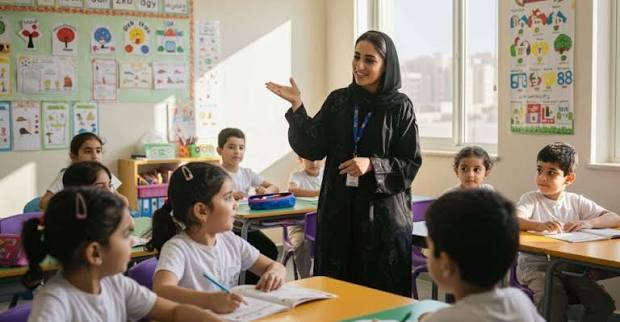
The Ministry of Education (MoE) of the United Arab Emirates is the federal government body responsible for regulating, managing, and advancing public and private K-12 education, vocational training, and higher education across the nation.
Formed during the founding of the UAE federation, the Ministry’s mission is to build a knowledge-based, globally competitive workforce aligned with national strategies like We the UAE 2031 and UAE Centennial 2071.
Core Mandates & Organizational Governance
The Ministry establishes national educational standards, oversees public schools, licenses educators, approves curricula, and regulates higher education institutions.
- Federal Regulatory Authority: Sets policies for public K-12 schools across all emirates.
- Regulatory Alignment with Local Authorities: Works in partnership with emirate-level education regulators—such as the Knowledge and Human Development Authority (KHDA) in Dubai and the Department of Education and Knowledge (ADEK) in Abu Dhabi—to ensure consistent implementation of national learning standards.
- Higher Education & Research Governance: Regulates public and private universities, accredits academic programs through the Commission for Academic Accreditation (CAA), and funds research through national strategic grants.
UAE K-12 School Cycle System
The MoE structures the public school system into three primary educational cycles:
| Cycle Phase | Grades Included | Key Learning Focus |
| Early Childhood | Kindergarten (KG1–KG2) | Foundational literacy, numeracy, play-based exploratory learning, and social development. |
| Cycle 1 | Grades 1 to 4 | Core literacy in Arabic and English, mathematics, science, Islamic education, and moral education. |
| Cycle 2 | Grades 5 to 8 | Intermediate STEM subjects, humanities, design & technology, and career guidance introduction. |
| Cycle 3 | Grades 9 to 12 | Secondary specialization leading to university or vocational pathways via specialized academic streams. |
Academic Streams in Secondary Education (Cycle 3)
To replace traditional single-track secondary schooling, the MoE introduced differentiated academic streams to tailor education to individual student capabilities and career goals:
- General Stream: Covers core academic subjects, preparing students for broad university degrees or vocational careers.
- Advanced Stream: Designed for high-achieving students with a stronger concentration on advanced mathematics and natural sciences (chemistry, physics, biology) taught primarily in English.
- Elite Stream (Scientific Track): A rigorous STEM-focused track tailored for exceptional students in mathematics and science, preparing them for top-tier global engineering, medical, and technology programs.
- Specialist & Vocational Streams: Applied technical and practical learning pathways equipping students with industry-ready technical skills.
Modern Curriculum Modernization & AI Integration
The MoE regularly updates national curricula to reflect global technological and economic shifts.
- Artificial Intelligence & Technology: Merged computer science, design, and coding into a single unified national curriculum titled “Artificial Intelligence and Technology”, aligned with the National AI Literacy Framework.
- STEM Language Standards: Transitioned science and mathematics instruction in advanced secondary tracks to English to bridge high school outcomes with university prerequisites.
- Cultural & Moral Heritage (Al San’a): Embedded traditional Emirati social etiquette, cultural values (Al San’a), and citizenship principles into the Moral Education framework across all educational cycles.
- Assessment Framework: Combines continuous formative evaluation (projects, practical coursework) with formal end-of-term summative examinations.
Strategic National Initiatives
| Program / Strategy | Core Objectives |
| National Strategy for Higher Education 2030 | Focuses on quality assurance, alignment with labor market demands, expanding research funding, and encouraging technical/vocational training. |
| Emirates Standardized Test (EmSAT) | A national system of standardized testing used to measure student competencies from school levels up to higher education admissions. |
| Teacher Licensing System (TLS) | A mandatory professional certification program ensuring all public and private school educators meet rigorous teaching competencies. |
| National Education Charter | Outlines core national values, academic integrity, and digital literacy frameworks across all learning environments. |
Through continuous structural, digital, and pedagogical updates, the Ministry of Education continues to transform the UAE’s learning landscape into an agile, innovative, and future-ready educational system.
APPLY NOW
Important Notice for Job Seekers
At dubaimedias.com (https://dubaimedias.com), we are committed to sharing genuine and verified job vacancy information to help job seekers find the right career opportunities. Please read the following carefully:
- Official Sources Only
All job vacancies published on our platform are sourced from official employers, company websites, or publicly available announcements. - 100% Free Service
Our services are completely free. We do not charge job seekers any fees at any stage of the recruitment process. - Not a Recruitment Agency
dubaimedias.com is not a recruitment or placement agency. We do not conduct interviews, shortlist candidates, or guarantee jobs. Our role is limited to sharing job information for awareness purposes only. - Apply Directly
Candidates should apply directly with the respective employers as mentioned in each job post, following the application instructions provided. - Beware of Fraud
If anyone contacts you claiming to represent dubaimedias.com and asks for money for job placement, please consider it fraudulent. Do not respond and report such incidents immediately.